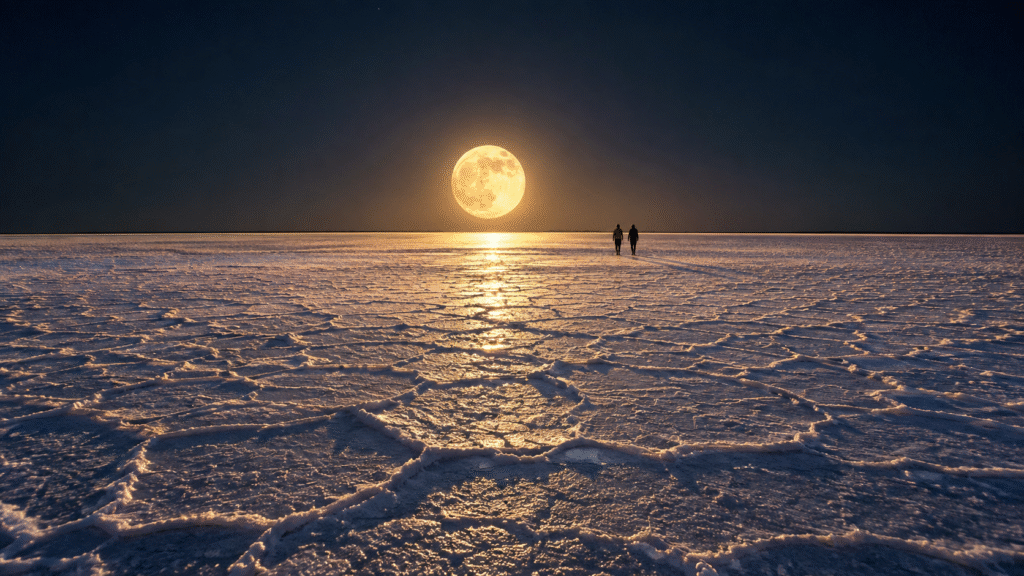
On a clear full moon night, the White Rann does something no photograph fully captures. The salt reflects so much light that you can walk across it without a torch, and the horizon simply stops existing.
That is why full moon dates sell out first every season. Here are the Rann Utsav full moon dates for 2026-27, what they cost extra, and how to plan around them properly.
Quick answer: The Rann Utsav full moon dates for the 2026-27 season fall on 24 November 2026, 23–24 December 2026, 22 January 2027 and 20–21 February 2027. Official full moon celebration windows are wider, and peak-season surcharges usually begin one day before the full moon date.
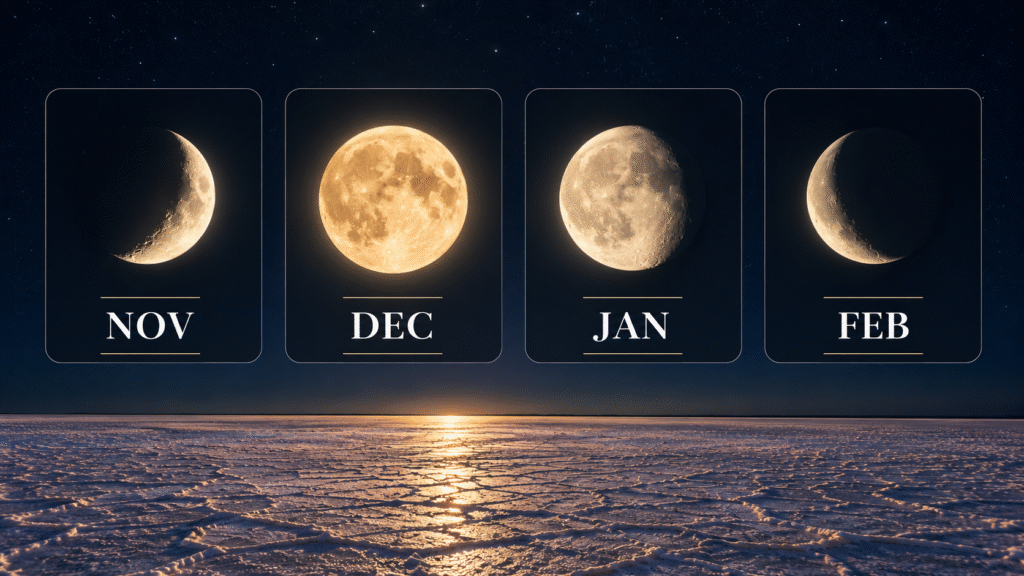
Rann Utsav Full Moon Dates 2026-27
| Full moon night | Day | Lunar month | What to expect |
|---|---|---|---|
| 24 November 2026 | Tuesday | Kartik Purnima | Early season. The salt may still be damp in places, with water mirroring the sky in patches |
| 23–24 December 2026 | Wed–Thu | Margashirsha Purnima | Coldest and busiest. Falls inside the Christmas–New Year rush |
| 22 January 2027 | Friday | Pausha Purnima | Dry, hard, blinding white salt. Just after the Kite Festival week |
| 20–21 February 2027 | Sat–Sun | Magha Purnima | Best value of the four. Comfortable nights, thinner crowds |
The 2026-27 festival season itself runs from 1 November 2026 to 7 March 2027 according to the official Rann Utsav site, though some booking sites list 5 November to 4 March. Confirm your exact dates on the official site before you pay.
Two full moons fall outside this window: 26 October 2026 (Sharad Purnima) and 22 March 2027. The White Rann is still there, but the Tent City is not.
Why the Dates You See Online Don’t Match
This confuses a lot of travellers, so it is worth explaining.
The astronomical full moon is a single moment, and the panchang assigns it to a purnima date. The official Rann Utsav full moon window is wider, usually covering the days on either side, because that is when celebrations and surcharges apply. For 2026-27, the official site has published windows of 23–25 November, 22–24 December, 21–23 January and 19–21 February.
So if one site tells you the full moon is on the 23rd and another says the 24th, both may be technically right. One is quoting the tithi, the other the festival window.
What this means for you: Book by the window, not the single date. If the official window is 23–25 November, any of those nights will be bright, and the middle night will be brightest.
The Surcharge Nobody Mentions Until Checkout
Full moon nights and weekends carry a premium of roughly 20 to 30 percent over standard rates. The official site also notes that the peak-season surcharge applies from one day before the full moon dates.
If your travel dates are flexible, this is where you save real money.
Insider tip: The night after the full moon is almost as bright and usually costs less. The moon is still over 95 percent illuminated, and the salt does not know the difference. If you want the full moon experience without the full moon rate, that is the night to book.
Understand Moonrise, Not Just the Date
This is the tip experienced photographers care about, and almost no travel blog mentions it.
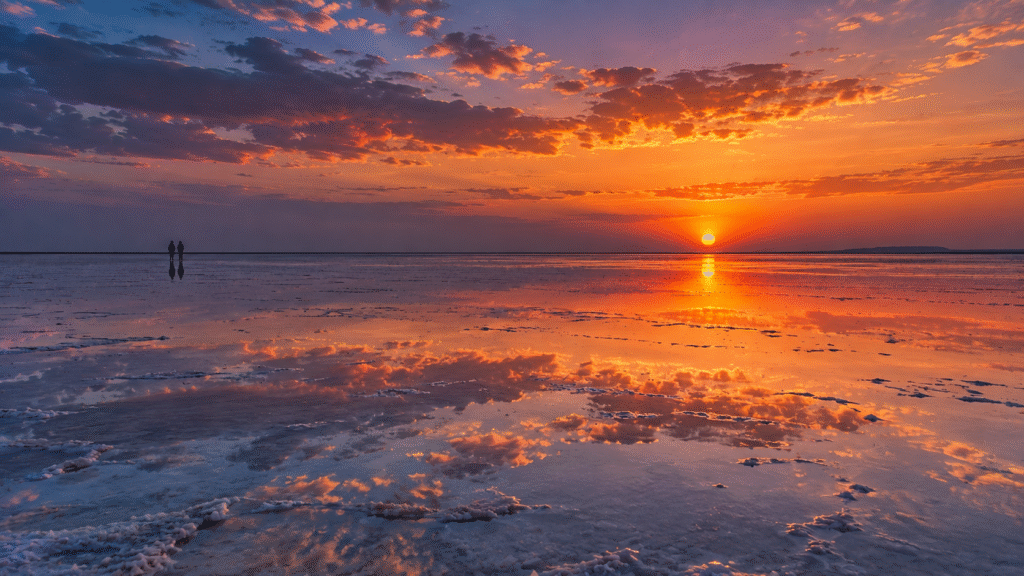
On the full moon night, the moon rises at roughly the same time as the sun sets. You get one continuous run of light: golden sunset straight into bright moonlight, with no dark gap in between.
Every night after that, the moon rises around 45 to 50 minutes later. So on the second or third night after the full moon, you get something arguably better: a dark, starry window first, then the moon climbing over the salt flat while you are still standing there.
Which to choose:
- Want the classic glowing white desert? Book the full moon night itself.
- Want stars and moonlight in one evening? Book two or three nights after the full moon.
- Want the Milky Way with no moon at all? Look at the dark moon nights instead, which the official site also publishes.
Which Full Moon Is the Best One?
All four are worth it, but they are not the same experience.
November (24 November 2026) — Early in the season, the landscape can still hold standing water in places, which produces mirror reflections along routes like the Road to Heaven. Good for photographers who want water, not just salt.
December (23–24 December 2026) — The most atmospheric and the most expensive. This full moon lands inside the Christmas–New Year stretch, which is the busiest window of the season. Book months ahead or skip it.
January (22 January 2027) — By now the salt is dry, hard and bright white. It falls just after Uttarayan on 14 January 2027 and before the Republic Day weekend, so the region is lively but not at December levels.
February (20–21 February 2027) — The value pick. Early November and February generally have the lowest tariffs of the season, with comfortable weather and good salt conditions. It falls on a Saturday, so book early anyway.
How Far Ahead Should You Book?
Full moon nights and the Christmas–New Year period sell out first, so early booking is the only reliable strategy. There is no last-minute full moon discount at the White Rann.
Also read the cancellation terms before paying. Official Tent City bookings typically allow a 90% refund 30 or more days before arrival, 60% between 15 and 30 days, and no refund within 15 days, with separate charges for date and name changes.
Translation: book early, but be sure of your date, because moving it later costs money.
Don’t Forget the Permit
The White Rann sits in a border-sensitive area, so every visitor needs an entry permit regardless of the date. Apply online at rannpermit.gujarat.gov.in. Fees are around ₹100 per adult, ₹50 for children aged 6 to 12, and free under 5, plus a small vehicle charge.
On peak weekends, the queue at the Bhirandiyara checkpost can get long, so arriving with a permit already issued saves a useful amount of time. If your entry and exit dates differ, apply for two days.
Visitor access to the Rann is usually within daylight hours, commonly noted as around 6 AM to 8 PM from the Dhordo side, so confirm the night-viewing timings locally during your travel week, especially if you are planning a late moonlit walk.
What to Carry on a Full Moon Night
Daytime temperatures sit around 20–30°C, but nights can drop below 10°C. On the salt flat, with open wind and no cover, it feels colder than the number suggests.
- A proper jacket, plus a shawl or thermals
- Socks and closed shoes you don’t mind getting salty
- A power bank, because cold drains phone batteries fast
- A small torch for walking back, even though the moon is bright
- Moisturiser and lip balm for the dry air
For photographers: carry a tripod. Moonlight is bright to the eye but still needs long exposures. Shoot manual, keep the ISO low, and include something in the frame for scale, because empty salt reads as empty frame.
Where to Stay for a Full Moon Night
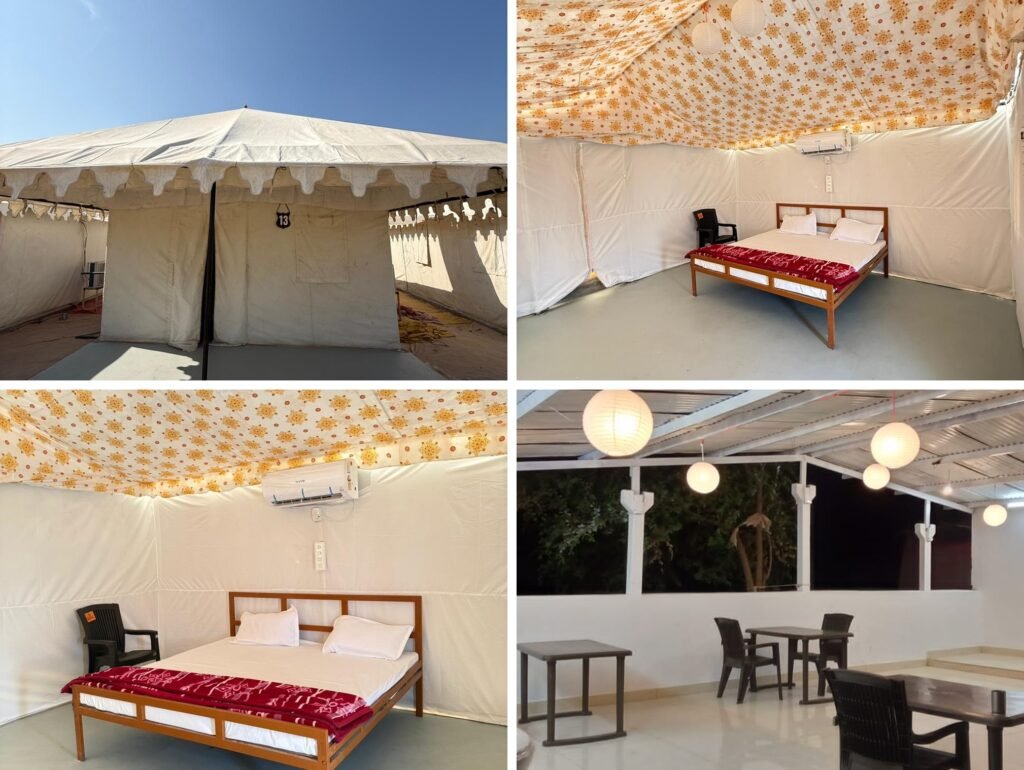
The official Tent City at Dhordo is the largest option, with over 400 tents, and it books out earliest on these exact dates.
The village camps around Dhordo are the practical alternative, and on full moon nights they have one real advantage: fewer people between you and the horizon.
StayGuru Patgar Tent is in Patgar Village near Dhordo, a short drive from the Rann Utsav Tent City. It offers Kutchi-style Swiss tents in AC and non-AC categories, Gujarati, Rajasthani, Punjabi and Continental meals, Jain meals on request, and open-air dining under the desert sky.
Book two nights, not one. A single night means you get exactly one shot at the sky, and one cloudy evening ends the trip. Two nights gives you a second chance, plus a sunrise.
Make the Day Count Too
You are already in Kutch for the moon, so use the daylight:
- Kalo Dungar, the highest point in Kutch at about 462 metres, roughly 46 km from the Tent City
- Khavda and the craft villages, known for Rogan art and pottery
- Road to Heaven, a stretch of about 30 km from Khavda to Dholavira across the Great Rann
For a full day of sightseeing around your full moon night, Kutch Tours & Travels can arrange the itinerary, and Hariom Tours & Travels handles cabs from Bhuj.
FAQs
What are the Rann Utsav full moon dates for 2026-27?
The full moon nights fall on 24 November 2026, 23–24 December 2026, 22 January 2027 and 20–21 February 2027. The official festival publishes wider full moon windows around each of these dates.
Is the full moon night worth the extra cost?
For most first-time visitors, yes. But full moon nights carry a premium of roughly 20 to 30 percent, and the night after the full moon is nearly as bright for less.
Can you see the White Rann at night without a full moon?
Yes. On dark moon nights the salt flat is excellent for stargazing, and the official site publishes those dates too. Confirm current night-access timings locally.
Which month has the best full moon at Rann Utsav?
February is the best balance of weather, crowds and price. December is the most atmospheric but also the most expensive and crowded.
Do I still need a permit on a full moon night?
Yes. A White Rann permit is required for every visitor on every date. Book it online at rannpermit.gujarat.gov.in or get one at the Bhirandiyara checkpost.
How early should I book a full moon night?
As early as your dates are confirmed. These nights sell out first, and cancellation charges make late date changes expensive.